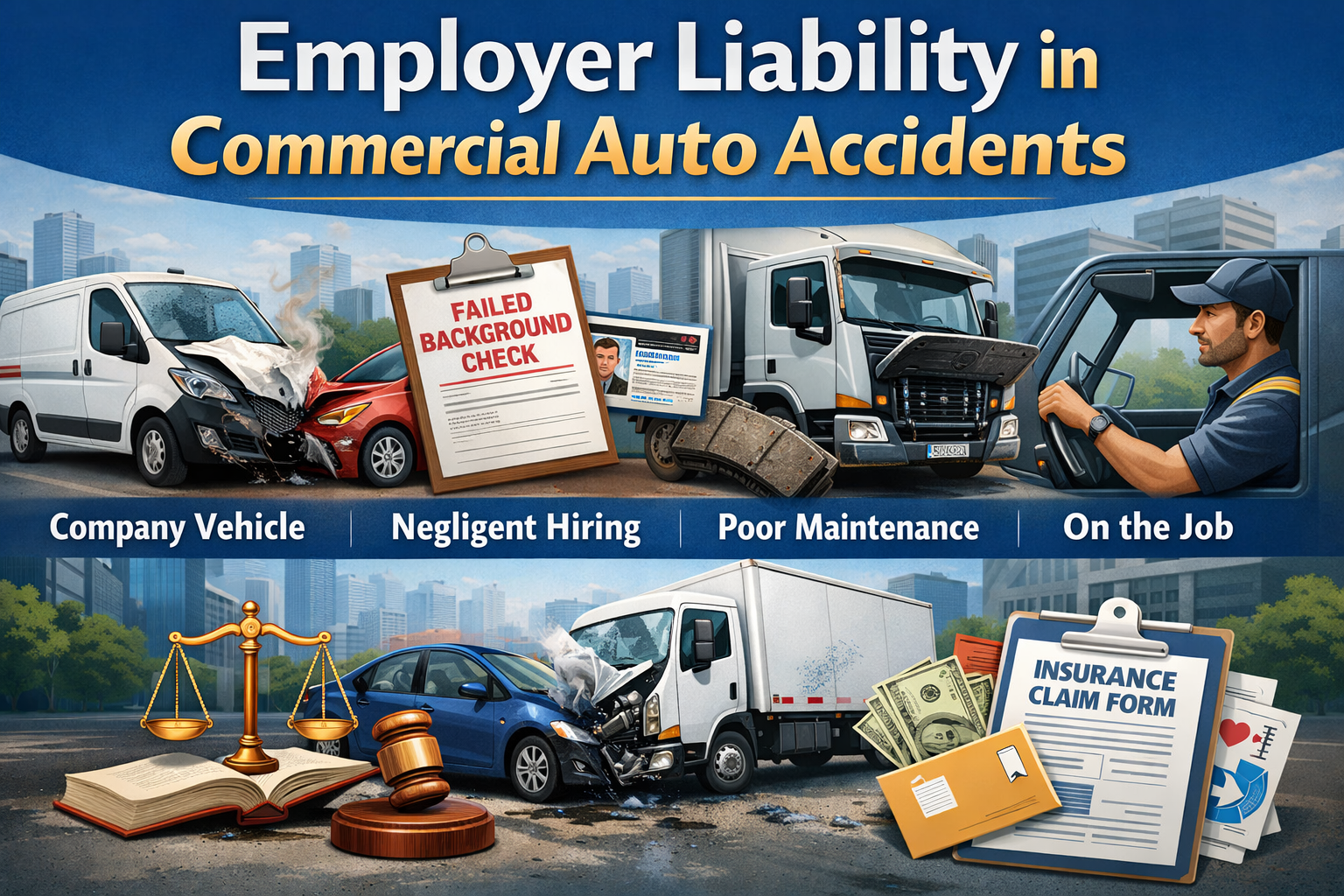
Commercial vehicles are essential to many industries, from delivery services and construction companies to logistics providers and corporate fleets. However, when a commercial vehicle is involved in an accident, determining who is responsible can be more complex than in typical car crashes. In many cases, the employer may be held legally responsible for the actions of their employee. Understanding employer liability in commercial auto accidents is important for both businesses and individuals who have been injured in such incidents.
What Is Employer Liability?
Employer liability refers to the legal responsibility a company may have for the actions of its employees while they are performing job-related duties. In the context of commercial auto accidents, this means an employer may be held accountable if an employee causes an accident while driving a company vehicle or while performing work-related tasks.
This legal principle is commonly known as “vicarious liability” or “respondeat superior,” which means that an employer can be responsible for the negligent actions of an employee if those actions occur within the scope of employment.
When Employers Can Be Held Liable
An employer may be held liable for a commercial vehicle accident under several circumstances, particularly when the employee was performing duties related to their job at the time of the crash. Common situations include:
1. Accidents During Work Duties
If a driver causes an accident while making deliveries, transporting goods, visiting clients, or performing any job-related task, the employer may be legally responsible for the damages.
2. Use of Company Vehicles
When employees operate company-owned vehicles as part of their work, employers may be liable if the driver’s negligence leads to an accident.
3. Negligent Hiring
Employers have a responsibility to hire qualified drivers. If a company hires someone with a poor driving record, a history of DUI offenses, or inadequate licensing, the employer could be held liable for negligent hiring.
4. Inadequate Training
Companies must ensure their drivers are properly trained to operate commercial vehicles safely. Lack of training or failure to provide safety guidelines can increase an employer’s liability.
5. Poor Vehicle Maintenance
Employers are responsible for maintaining company vehicles in safe operating condition. Mechanical failures caused by poor maintenance—such as faulty brakes or worn tires—can make the company liable for resulting accidents.
When Employers May Not Be Liable
There are situations where employers may not be responsible for a commercial auto accident. For example:
1. The employee was using the vehicle for personal errands unrelated to work.
2. The driver was acting outside the scope of employment.
3. The driver was an independent contractor rather than an employee (although this can sometimes be legally disputed).
4. Determining whether an employer is liable often requires a detailed investigation into the circumstances of the accident and the employment relationship.
The Role of Insurance in Commercial Auto Accidents
Commercial auto insurance policies typically cover damages resulting from accidents involving company vehicles. These policies may include coverage for:
1. Property damage
2. Medical expenses
3. Liability claims
4. Legal defense costs
However, insurance coverage limits and policy details can significantly affect how compensation is handled after an accident.
How Victims Can Prove Employer Liability
For victims seeking compensation, proving employer liability generally requires demonstrating several key factors:
1. The driver was an employee of the company
2. The accident occurred while the employee was performing job-related duties
3. The driver’s negligence caused the accident
4. The victim suffered damages, such as injuries, medical expenses, or lost wages
5. Evidence such as employment records, vehicle maintenance logs, driver schedules, and accident reports can play a critical role in establishing liability.
Why Legal Guidance Matters
Commercial auto accident cases can involve multiple parties, including employers, drivers, insurance companies, and sometimes vehicle manufacturers. Because of this complexity, determining liability and securing fair compensation can be challenging without legal assistance.
An experienced attorney can help investigate the accident, gather evidence, negotiate with insurance companies, and pursue the compensation victims deserve.
Conclusion
Employer liability in commercial auto accidents is an important legal concept that holds companies accountable for the actions of their employees while on the job. Whether due to negligent driving, poor hiring practices, inadequate training, or improper vehicle maintenance, businesses can face significant legal responsibility when accidents occur. Understanding these rules can help both employers reduce risks and victims better protect their rights after a commercial vehicle accident.